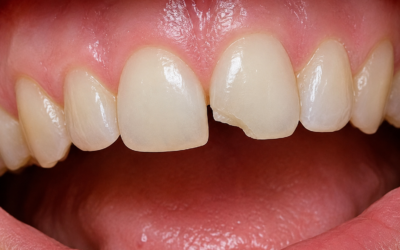
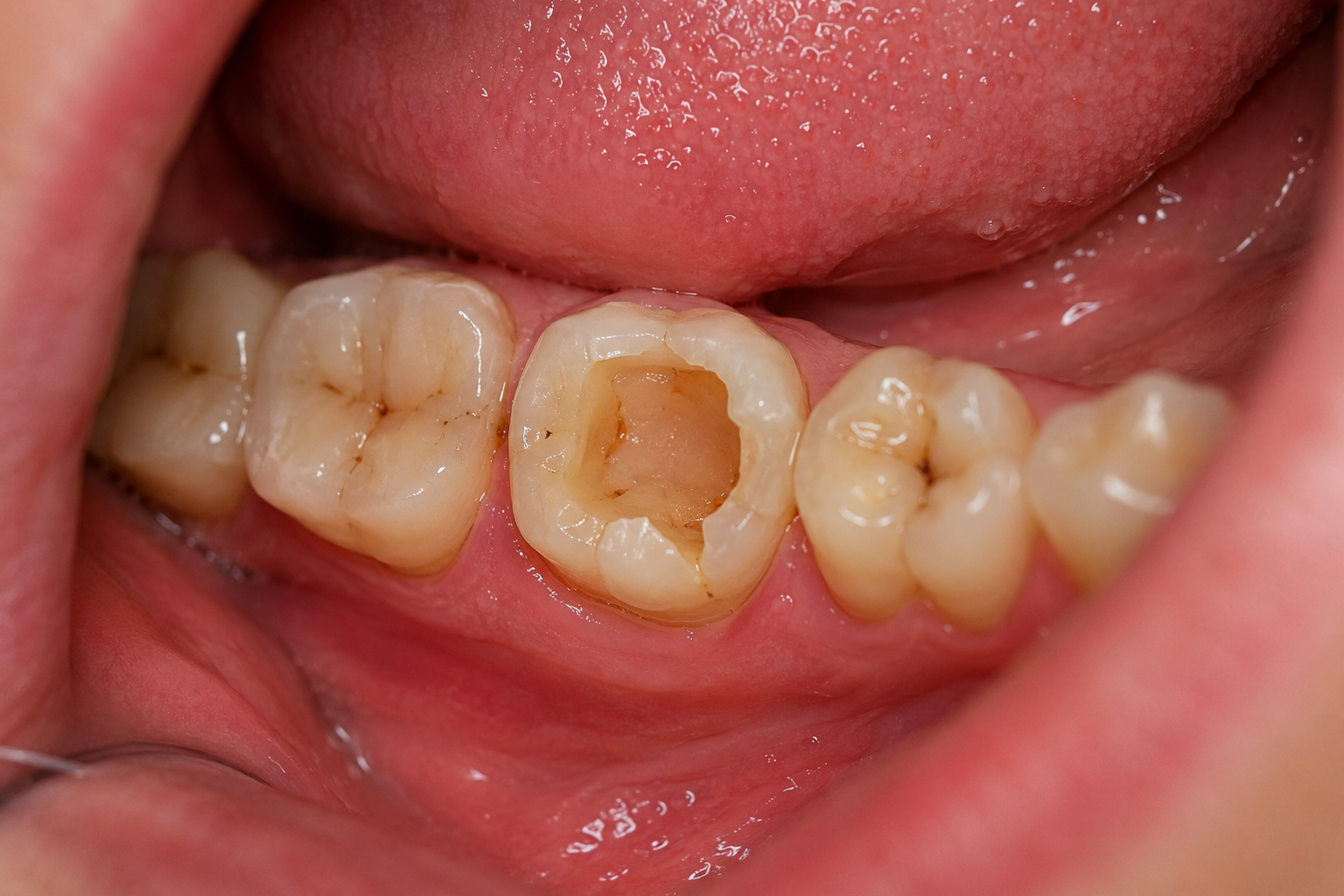
You bite into something, feel something hard in your mouth and suddenly realise part of your tooth has disappeared. Or perhaps you notice a sharp edge with your tongue and eventually work out that an old filling has come loose.
Losing a filling can be unsettling, but it does not automatically mean that you need emergency treatment. The urgency depends on what the tooth looks and feels like afterwards. A filling that falls out without pain may be very different from a filling that comes away and leaves you with severe pain, swelling or a tooth that is difficult to use.
There is also an important reason not to ignore the problem simply because you feel fine. The filling was there to restore and protect a tooth that had already lost some of its natural structure. Once it comes out, that area is exposed again, and the tooth may be more vulnerable to further damage.
So what should you do if you lose a filling? First, protect the tooth as much as you reasonably can, avoid putting unnecessary pressure on it and arrange a dental assessment. If you have severe pain, swelling, significant bleeding or other worrying symptoms, you may need more urgent attention.
The good news is that losing a filling does not necessarily mean starting the entire treatment process from scratch. Sometimes the filling can simply be replaced. In other cases, the dentist may find that the tooth has developed further decay, fractured or become too weakened for another filling to be the best solution.
Request a Dental Assessment for a Lost Filling
Fill in the form below to tell the Laomai Medical Centre team about your lost filling and request an appointment to have the tooth checked.
Is Losing a Filling a Dental Emergency?
Usually, losing a filling is not automatically a dental emergency.
If the filling has fallen out but you have no significant pain, swelling or other concerning symptoms, you may be able to arrange a normal dental appointment rather than seeking emergency treatment immediately.
That does not mean you should leave the tooth untreated for weeks or months.
The filling was placed because the tooth had already been affected by decay, damage or another problem. Once the restoration is gone, the exposed area may become sensitive and more difficult to keep clean. The remaining tooth may also be weaker than a completely healthy tooth.
The situation becomes more urgent if the tooth is causing significant pain, the exposed area is very sensitive, the tooth has broken further or there are signs of infection such as swelling or a bad taste.
In other words, the important question is not simply, “Did my filling fall out?”
It is, “What is happening to the tooth now that the filling is gone?”
What Should You Do When a Filling Falls Out?
Start by rinsing your mouth gently with water. This can remove loose pieces of filling material and food from around the tooth without irritating the area unnecessarily.
If you found the filling, you can keep it and take it to your appointment. The dentist may be interested in seeing the restoration, particularly if it is unclear how it came out or whether part of the tooth came away with it.
Try to avoid chewing on the affected side until the tooth has been examined. This is especially important if the tooth feels weak, sharp or sensitive.
You should also pay attention to what the tooth feels like when you are not eating. Is there a dull ache? Does cold water cause a sharp sensation? Does the tooth hurt when you bite down? These details can help the dentist understand what may be happening.
Most importantly, arrange an appointment rather than simply waiting to see whether the tooth becomes painful.
Why Does a Filling Fall Out?
Fillings can come loose for several reasons, and it is not always because something was done incorrectly when the filling was originally placed.
A filling is exposed to chewing forces every day. Over time, the tooth around the restoration can change, wear or develop new decay. The filling itself can also become damaged or lose its seal.
Sometimes a filling comes out because the tooth underneath it has fractured. This can happen particularly when a large filling has left relatively little natural tooth structure surrounding it.
There are also situations where the original filling has simply reached the end of its useful life.
This is why replacing the filling without examining the tooth is not always the right approach. The dentist needs to establish why it came out in the first place.
What If the Tooth Does Not Hurt After Losing the Filling?
You may be tempted to assume that everything is fine if the tooth feels completely normal.
That is reassuring, but it is not a reason to forget about the missing filling.
Some teeth become extremely sensitive as soon as a filling is lost. Others remain surprisingly comfortable, particularly when the remaining tooth structure still protects the deeper tissues.
There may still be decay, a crack or another structural problem underneath or around the old restoration.
A painless tooth can also become painful later if the exposed area is repeatedly irritated by chewing, temperature changes or bacteria.
So while you may not need to treat a painless lost filling as an emergency, you should still have it assessed and repaired within a reasonable timeframe.
What If the Tooth Becomes Sensitive?
Sensitivity is one of the most common things people notice after losing a filling.
Cold water, hot drinks, sweet foods or even cold air may suddenly produce a sharp sensation from the affected tooth. This can happen because the filling was previously covering an area of the tooth that is now exposed.
The severity and duration of the sensitivity matter.
A brief sharp sensation that disappears quickly can be different from pain that lingers for several minutes after eating or drinking. Lingering pain may suggest that the deeper part of the tooth is irritated and deserves closer assessment.
Do not deliberately keep testing the tooth with ice-cold water or hot drinks to see whether it still hurts. That will not tell you whether the tooth needs a filling, root canal treatment or another procedure.
A dentist can assess the tooth properly and determine what is causing the sensitivity.
Can You Eat Normally After Losing a Filling?
You can usually continue eating, but it is sensible to be cautious until the tooth has been examined.
Try to chew on the opposite side of your mouth and choose foods that do not require excessive force. Very hard foods, sticky sweets and anything that repeatedly gets caught around the exposed area are best avoided for the time being.
This is particularly important if the filling was large.
A tooth that has already required a substantial filling may have less natural structure than a healthy tooth. If the restoration has come out because the tooth has weakened or cracked, biting something hard could potentially cause further damage.
There is no need to stop eating altogether. The goal is simply to avoid putting unnecessary stress on the affected tooth while you wait for treatment.
Should You Brush the Tooth After Losing a Filling?
Yes.
Keeping the area clean is important, particularly because the tooth may now have an irregular surface or an exposed area where food can collect.
Brush gently around the affected tooth rather than avoiding it completely. Avoiding the area because it feels uncomfortable can allow plaque and food debris to accumulate around the tooth.
If the tooth is sensitive, you may need to brush more carefully and avoid very hot or cold water.
Your dentist can also advise you on the best way to care for the tooth while waiting for the restoration.
The fact that the filling is missing does not mean you should stop maintaining your normal oral hygiene.
What If the Lost Filling Leaves a Sharp Edge?
A sharp edge can be one of the first things you notice.
Your tongue may keep catching against the tooth, or the edge may rub against the inside of your cheek.
Try not to repeatedly run your tongue over it. The constant friction can leave your tongue or cheek irritated.
Do not attempt to file the tooth down yourself.
It may seem like a simple solution, but you cannot tell from the sharpness alone whether you are dealing with a piece of filling material, fractured enamel or a more significant break in the tooth.
A dentist can smooth or restore the area safely once they have established what has actually happened.
What If Part of the Tooth Came Out With the Filling?
This is more concerning than simply losing a filling.
Sometimes patients think they have lost a filling when, in reality, part of the natural tooth has fractured along with the restoration. This can leave a much larger gap or a sharp, irregular edge.
You may notice that the tooth looks substantially different or feels weaker than it did before.
If that happens, arrange a dental assessment promptly.
The dentist will need to determine how much natural tooth structure remains and whether the tooth can still support a filling or another restoration.
A broken tooth does not automatically mean extraction is necessary. Depending on the extent of the damage, it may still be possible to rebuild and protect it.
Can a Lost Filling Cause Toothache?
Yes.
The tooth may become painful because the area that was previously covered by the filling is now exposed.
Pain can also indicate that the tooth has developed further decay, that a crack is present or that the pulp inside the tooth has become irritated.
The type of pain can provide useful clues, although it cannot provide a diagnosis by itself.
A brief sensitivity to cold is different from spontaneous throbbing pain that wakes you at night. Pain when biting can also point towards a different problem from pain that occurs without any stimulation.
If you have developed toothache after losing a filling, tell the dentist exactly when the pain started and what triggers it.
When Does a Lost Filling Become an Emergency?
The loss of the filling itself is not necessarily an emergency. The symptoms that accompany it are what can change the situation.
Severe pain that is difficult to control, significant swelling around the tooth or face, uncontrolled bleeding, or a tooth that has fractured extensively should be assessed urgently.
A bad taste, pus, fever or feeling generally unwell can also suggest an infection that needs prompt attention.
If swelling is spreading towards your face, jaw, neck or throat, particularly if it is affecting your ability to breathe, swallow or speak, seek emergency medical attention.
For a filling that has simply fallen out without pain or swelling, you can generally arrange a dental appointment rather than treating it as an emergency.
The important thing is not to confuse “not an emergency” with “does not need treatment.”
Need Urgent Advice About a Lost Filling?
Fill in the form below to describe your symptoms and request advice from the Laomai Medical Centre team about how soon you should be seen.
Can a Lost Filling Be Replaced?
Sometimes, yes.
If the tooth underneath is still healthy enough and there is enough structure remaining, the dentist may be able to remove any damaged material and place a new filling.
But this is not guaranteed.
A dentist may find that the tooth has developed additional decay or that the remaining walls have become too weak to support another filling.
The size of the original filling is also relevant. A tooth with a small filling may still have plenty of natural structure around it. A tooth with a very large restoration may have much less healthy tooth left.
The dentist will consider all of these factors before deciding whether another filling is appropriate.
What If the Dentist Cannot Replace the Filling?
Losing a filling can sometimes reveal that the tooth needs more than a replacement restoration.
If a significant amount of tooth structure has been lost, the dentist may recommend a larger restoration or crown to protect what remains.
If the decay has reached the pulp, root canal treatment may be necessary before the tooth can be restored.
In more severe cases, the tooth may be too damaged to restore predictably and extraction may need to be discussed.
This does not mean that every lost filling leads to a crown or root canal.
It simply means that the dentist needs to see what is actually underneath the missing restoration before deciding what comes next.
Could You Need a Root Canal After Losing a Filling?
Not necessarily.
Root canal treatment is generally considered when the pulp inside the tooth has become irreversibly inflamed or infected.
A lost filling can expose a previously protected part of the tooth, but that does not automatically mean the pulp has been damaged.
The dentist may assess the tooth’s symptoms, examine it and perform tests to determine how the pulp is responding.
If the tooth has severe spontaneous pain, lingering sensitivity or other signs of significant pulp irritation, further treatment may be necessary.
The purpose of root canal treatment is to remove damaged or infected tissue from inside the tooth so that the remaining tooth can potentially be preserved and restored.
Could the Tooth Need a Crown Instead?
A crown may be considered when there is not enough natural tooth structure remaining for a conventional filling to provide adequate protection.
This can happen with teeth that have had large fillings for many years, particularly back teeth that deal with considerable chewing forces.
If the filling falls out and the dentist finds that the remaining tooth walls are thin or weakened, replacing the old filling may not be the most reliable long-term option.
A crown covers and protects the remaining tooth structure rather than simply filling the space that has been left behind.
The recommendation depends on the individual tooth, though. A small lost filling does not automatically mean that a crown is required.
What If the Filling Was Very Large?
A large filling changes the situation because the tooth may already have lost a considerable amount of its natural structure.
Think about the difference between a small repair on one corner of a tooth and a large restoration that occupies much of the chewing surface. The second tooth may have less natural structure supporting it.
If a large filling comes out, the dentist may therefore be more cautious about simply replacing it.
They may examine the remaining walls for cracks and consider whether the tooth would benefit from additional protection.
This is one of the situations where the reason behind the lost filling matters.
If the tooth has become structurally weak, putting another large filling into it may not address the underlying problem.
What If You Have Lost the Same Filling Before?
A filling that repeatedly falls out deserves a closer look.
If the same restoration has been replaced several times, the issue may not simply be that the filling needs to be put back.
The tooth could have developed new decay, the restoration could be experiencing excessive chewing forces or the remaining tooth structure could be too weak to support the same type of filling.
Grinding or clenching can also place additional stress on teeth and restorations.
Rather than repeatedly repairing the same problem without investigating why it is happening, ask your dentist whether the tooth needs a different type of restoration.
The best solution is not always the one that most closely resembles the original filling.
Can a Filling Fall Out Because of Decay?
Yes.
A filling does not prevent decay from occurring elsewhere on the same tooth.
If bacteria and plaque accumulate around the edges of an old restoration, new decay can develop around or underneath it. This can weaken the tooth and affect the seal around the filling.
Eventually, the restoration may loosen or fracture.
This is why the dentist needs to inspect the tooth carefully when a filling falls out.
Simply looking at the filling itself will not reveal whether decay has developed underneath or around it.
If new decay is present, the dentist may need to remove the affected tooth structure before deciding how to restore the tooth.
What If You Swallow the Filling?
If you accidentally swallow a small filling, it will usually pass through the digestive system without causing a problem.
You do not normally need to try to retrieve it.
However, if you think you inhaled the filling rather than swallowed it, that is different. Coughing, choking, breathing difficulties or persistent discomfort after the incident should be taken seriously.
You should also tell your dentist that the filling has been lost, even if you swallowed it, because the missing restoration still needs to be dealt with.
The important issue is not the piece of filling itself. It is the condition of the tooth that has been left without its restoration.
How Long Can You Wait to Replace a Lost Filling?
There is no universal number of days that applies to every patient.
A painless lost filling is generally less urgent than one associated with severe pain, swelling or significant tooth damage. However, leaving the tooth untreated indefinitely is not a good idea.
The longer the tooth remains without its restoration, the longer it is exposed to chewing forces and the oral environment.
If the tooth is sensitive, you may also find yourself avoiding certain foods or repeatedly irritating the area.
Booking an appointment promptly allows the dentist to assess the tooth while the situation is still relatively straightforward.
Waiting until the tooth becomes painful can turn a simple restoration problem into a more complicated treatment problem.
Can You Temporarily Cover a Lost Filling?
There are temporary dental filling materials available from pharmacies, and these may sometimes be used as a short-term measure when immediate dental care is not possible.
However, a temporary filling is not a permanent repair.
If you use one, follow the product instructions carefully and arrange a dental appointment as soon as reasonably possible.
Do not use household materials such as glue to try to recreate the filling.
The purpose of a temporary measure is simply to protect the area for a short period, not to replace professional assessment and treatment.
What Happens During the Dental Appointment?
The dentist will first look at the affected tooth and ask about what happened.
They may want to know how long ago the filling was placed, whether it had caused problems previously and whether you have developed pain or sensitivity since losing it.
The tooth may then be tested and, depending on the circumstances, an X-ray may be recommended.
The dentist is looking at more than the empty space left by the filling. They need to establish whether there is decay, a crack, damage to the remaining tooth structure or any involvement of the pulp.
Once that is understood, the appropriate treatment can be discussed.
For some patients, that may be a new filling. For others, the tooth may require a larger restoration, crown or root canal treatment.
How Much Does It Cost to Replace a Lost Filling?
The cost depends on what the tooth needs.
A straightforward replacement filling is generally less involved than a tooth requiring a crown or root canal treatment followed by restoration.
The size and location of the filling, the material used and the amount of tooth structure that remains can all influence the final cost.
If you have lost a filling and are worried about the price, ask the dentist to explain the available treatment options and the expected cost before treatment begins.
It is also useful to ask whether the quoted amount includes any necessary X-rays or additional procedures.
That gives you a much clearer picture than assuming that every lost filling costs the same amount to repair.
Can Medical Aid Cover a Replacement Filling?
Your medical aid may contribute towards dental treatment depending on your specific plan and available dental benefits.
Coverage varies considerably between schemes and plans, and you may have annual limits or specific reimbursement rates.
A dental benefit also does not necessarily mean that every treatment will be fully covered.
Before treatment, check whether you have available dental benefits and whether the procedure is covered under your plan.
If you are unsure, the dental practice may also be able to explain what information you need when checking your benefits, but your medical scheme remains the best source for confirming your actual available cover.
How Can You Prevent Another Filling From Falling Out?
You cannot prevent every restoration from eventually needing replacement, but good oral care can help protect both the tooth and the filling.
Brush twice a day with fluoride toothpaste and clean between your teeth regularly. Keeping plaque under control is particularly important around existing restorations because decay can develop around their edges.
It is also worth avoiding habits that place unnecessary stress on your teeth, such as chewing ice, biting pens or opening packaging with your teeth.
If you grind or clench your teeth, mention this to your dentist. Excessive forces can affect both natural teeth and dental restorations.
Regular dental examinations are useful as well because a dentist can identify problems around an old filling before the restoration completely fails.
Request a Custom Dental Repair Quote
Fill in the form below to request an assessment and personalised quote for repairing the tooth where your filling has come out.
What If the Filling Falls Out at Night or Over a Weekend?
This is where knowing the difference between an urgent problem and a problem that can wait for a normal appointment becomes useful.
If the filling has fallen out but the tooth is comfortable, there is no swelling and you can eat and drink without significant discomfort, you can generally protect the tooth and arrange an appointment during normal practice hours.
If you are experiencing severe pain, significant swelling, uncontrolled bleeding or other worrying symptoms, you should seek urgent dental care.
While waiting, keep the area clean and avoid chewing on the affected side.
You do not need to panic simply because the filling came out after hours. What matters is the condition of the tooth and the symptoms you are experiencing.
What If the Tooth Starts Hurting at Night?
Tooth pain that becomes severe enough to wake you from sleep is more concerning than a painless lost filling.
Severe or spontaneous pain can occur when the deeper tissues of the tooth have become irritated or inflamed.
If you have significant pain, particularly if it is accompanied by swelling or a bad taste, contact a dentist promptly.
While waiting to be seen, avoid very hot or cold foods and drinks if they trigger the pain, and follow the directions on any appropriate over-the-counter pain medication you use.
Do not place aspirin directly against the tooth or gum. It can irritate the soft tissues of the mouth and will not fix the underlying problem.
What If the Tooth Has a Hole Where the Filling Was?
You may be able to feel the space with your tongue after the filling comes out.
The hole is essentially the area that was previously occupied by the restoration, but its size and depth can vary.
Try not to poke food or objects into the opening.
Food can become trapped there, and the tooth may be more sensitive to temperature and pressure than before.
The dentist can clean the area, assess the remaining tooth structure and determine whether a new filling or another restoration is appropriate.
Can You Brush Normally Around a Lost Filling?
Yes, although you may need to be gentle if the area is sensitive.
Keeping the tooth clean is important because food and plaque can collect around an irregular surface more easily.
Use your normal fluoride toothpaste and brush carefully around the tooth rather than avoiding it.
If flossing around the area causes significant pain or catches on a sharp edge, mention this to the dentist.
The aim is to keep the area clean without causing unnecessary irritation while you wait for treatment.
What Happens If You Ignore a Lost Filling?
You may get away with it for a while, particularly if the tooth does not hurt.
That can make it tempting to leave the problem alone.
But the missing filling does not change the fact that the tooth previously needed restoration. If the underlying cause was decay or structural damage, that problem has not disappeared simply because the tooth is currently comfortable.
The tooth may also be exposed to further wear and chewing forces.
A problem that might have been manageable with another filling can become more complicated if additional tooth structure is lost.
Getting the tooth assessed does not necessarily mean expensive treatment. It simply gives you the opportunity to find out what the tooth actually needs.
What If the Dentist Says the Tooth Cannot Be Filled Again?
This can happen when the tooth has lost too much structure for another conventional filling to provide reliable support.
The next option may be a larger restoration or crown, depending on the amount of healthy tooth remaining.
If the pulp has been affected, root canal treatment may be needed before the tooth is restored.
In severe cases where the tooth cannot be predictably repaired, extraction may be considered.
That can sound alarming when all you expected was a replacement filling, but the recommendation is based on the condition of the tooth rather than the fact that the original filling fell out.
Ask your dentist to explain exactly what has changed and why the proposed treatment is more extensive.
A Lost Filling Is a Reason to Act, Not Panic
Losing a filling can be inconvenient and sometimes uncomfortable, but it does not automatically mean you are facing a dental emergency.
If the tooth is comfortable and there is no swelling or significant damage, arrange a dental appointment and protect the area in the meantime.
If you develop severe pain, swelling, significant bleeding, a badly broken tooth or symptoms suggesting infection, seek more urgent care.
The most important thing is to have the tooth assessed rather than simply replacing the missing filling without finding out why it came out.
Sometimes the answer really is as simple as replacing the filling.
Other times, the dentist may discover decay, a crack or weakened tooth structure that needs a different approach.
Laomai Medical Centre provides dental fillings and restorations as part of its dental services, and an assessment can help determine the most appropriate way to restore a tooth after a filling has been lost.
Request Your Dental Assessment
Fill in the form below to request an appointment with Laomai Medical Centre and find out what your tooth needs after losing a filling.